Material Guide · Kitchen
What the finish names on a faucet or a cabinet pull actually mean, how each one ages in a working kitchen, and how to choose one you will still like in ten years.
Research-Based Evaluation · By the PALVILLA Editors · Reviewed by Al Sabri, Founder & Editor · Last reviewed: October 2026
Disclosure: Palvilla participates in the Amazon Services LLC Associates Program. As an Amazon Associate, we earn from qualifying purchases at no additional cost to you. Learn more.
“Champagne bronze”, “brushed moderne brass”, “spot-resist stainless”: finish names are written by marketing teams. Underneath them sit only a handful of real materials and processes, and those decide how a faucet, a pot filler or a cabinet pull looks after years of wet hands, hard water and cleaning sprays.
This guide separates the base metal (what the part is made of) from the surface finish (what you see and touch). A solid brass faucet can wear a nickel, chrome or gold-toned finish; a zinc handle can look identical on day one. Knowing which is which is how you buy once.
This is a research-based guide. We drew on manufacturer finish descriptions and warranty terms from Kohler, Delta, Moen and Kraus, published standards for plated and coated plumbing finishes, and recurring owner feedback on how finishes wear. We have not run our own abrasion or corrosion tests.
| Finish | How it is made | Durability | Hides spots | Looks best with |
|---|---|---|---|---|
| PVD (gold, nickel, black tones) | Thin metal-ceramic layer bonded in a vacuum chamber | Very high scratch and tarnish resistance | Good in brushed versions | Almost anything; the safest choice for warm metals |
| Polished chrome | Electroplated over nickel | High; hard and easy to clean | Poor; shows every drip | White, gray and classic kitchens |
| Brushed nickel | Nickel plating with a brushed texture | Good | Very good | Warm whites, wood, stone |
| Stainless steel (solid) | The part itself is stainless; often with a spot-resistant coating | Very high | Very good | Stainless appliances, modern kitchens |
| Matte black | Powder coat or PVD, depending on the maker | Varies widely by process | Poor; shows mineral spots | Light counters, modern and industrial schemes |
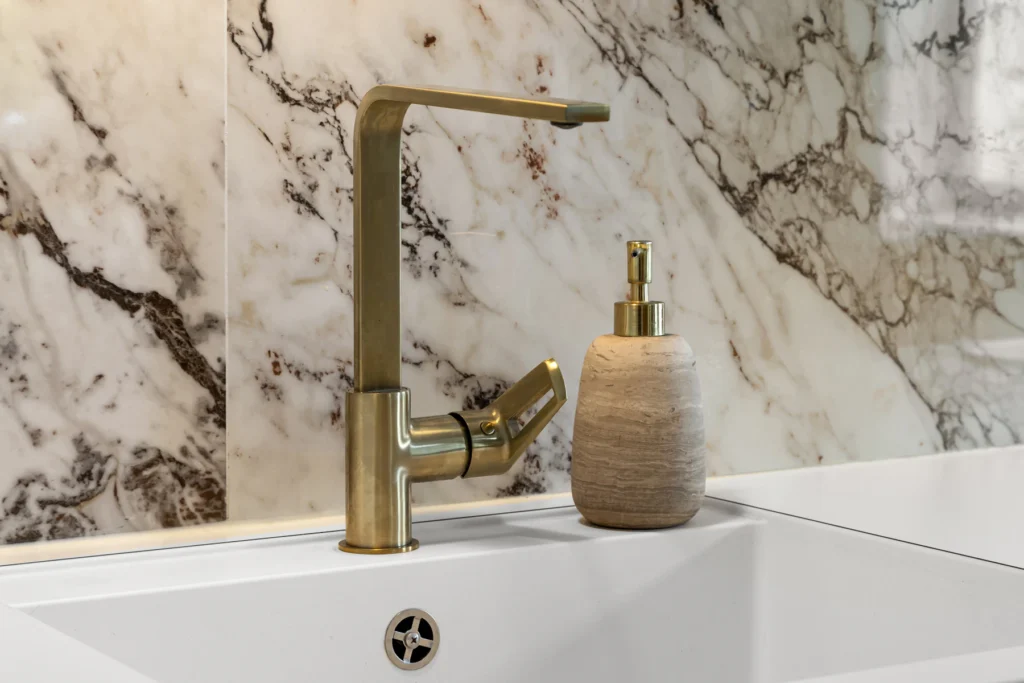
| Unlacquered brass | Bare brass with no protective coat | Will change; develops patina | Patina hides marks over time | Traditional and European-inspired kitchens |
“Solid brass” describes what a faucet or pull is cast or machined from. Brass resists corrosion, holds threads and fittings well and is heavy in the hand, which is why premium makers use it for faucet bodies and waterways. It says nothing about the color you will see; a solid brass faucet may be finished in chrome or black.
Lower-priced fixtures often use zinc alloy for handles, escutcheons or even bodies. Zinc is not automatically a problem, but it is less forgiving if a finish is breached, so on a faucet we treat a brass body, a ceramic disc valve and a lifetime finish warranty as a package. For example, the Kraus Bolden is listed as brass construction, while the Amazon listing for one polished nickel Kohler model gives zinc as the material.
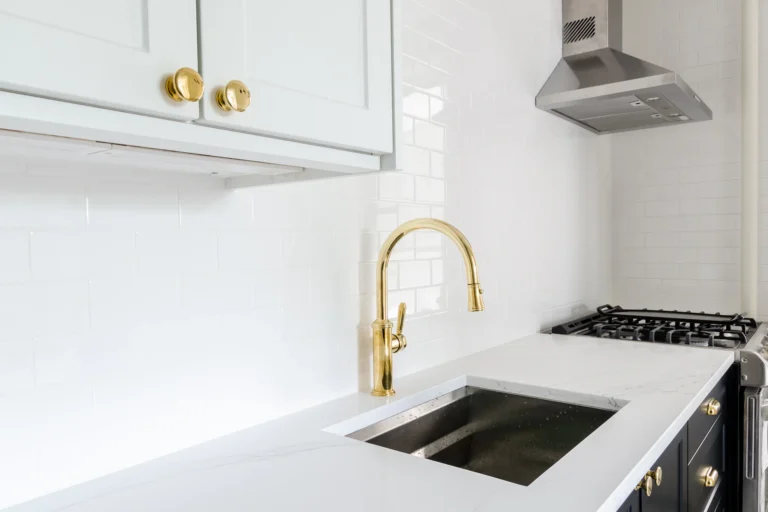
Physical vapor deposition bonds an extremely thin, hard layer of metal and ceramic compounds to the part inside a vacuum chamber. The result resists scratches, tarnish and many cleaners far better than older plated or lacquered brass tones, which is why brushed gold faucets became practical for working kitchens.
Brand names vary: Kohler sells its durable tones as “Vibrant” finishes, and Delta markets its corrosion-resistant finishes as “Brilliance” and backs them for life. If you want gold, look for that kind of named finish and a written finish warranty, as on the Delta Trinsic in Champagne Bronze or the Kohler Tone in Brushed Moderne Brass.
If you want a faucet that looks clean between wipes, choose a brushed or satin texture in a nickel or stainless tone. The fine grain breaks up water spots and fingerprints. Brushed nickel leans slightly warm and sits well with wood and cream cabinetry; stainless tones are cooler and match appliances. The Kohler Simplice in Vibrant Stainless is a good example of how forgiving this family of finishes is.
Polished chrome is hard, bright and easy to clean, but every drip dries into a visible spot, especially with hard water. Matte black reads modern and graphic and looks wonderful against pale stone, yet mineral deposits show as white marks. Both suit people who wipe down the sink area daily. With matte black in particular, check whether the maker uses PVD or a powder coat, because durability varies widely between the two.
Unlacquered brass has no protective coat, so it darkens and develops a patina where hands touch it most. Many designers love it for exactly that reason: it looks collected rather than new. Choose it only if you enjoy change. You can polish it back to bright with a brass cleaner, but you will be doing so regularly if you want it to stay that way.

Reviewed by
Al Sabri founded PALVILLA out of a lifelong love of homes and the artistry behind them: the line of a well-made sofa, the warmth of a brass fixture, the way good light changes a room. Based in Des Plaines, Illinois, he leads PALVILLA’s editorial direction and reviews our guides, pairing an eye for beauty with honest, research-based advice so readers can choose pieces they will still love years from now.
Researched and written by the PALVILLA Editors from manufacturer documents and owner evidence, with AI-assisted drafting and source checks. How we create our guides · Editorial standards
We use Google Analytics to understand which guides help readers most. It is off unless you allow it. Cookie settings